Community Engagement in Action: Breaking down barriers for those visually impaired
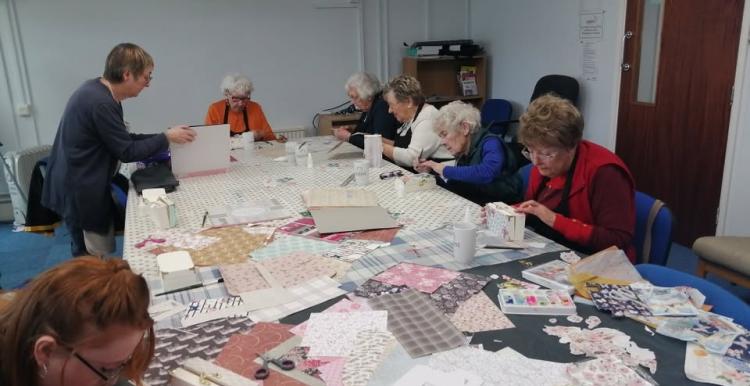
We discussed the Together Connect Network, explaining how we bring together a range of local organisations offering, support, advice and community services. Members of the group responded positively and were interested in learning more about the services and opportunities available.
Barriers to accessing healthcare
Attendees were asked about their experiences within healthcare, highlighting the barriers they face and exploring ideas for changes to improve ease of access. The group was very open in sharing their views and spoke passionately about the quality of care they receive.
- A key theme raised was the increasing reliance on digital technology and the challenges this presents for people with visual impairments.
- Members described difficulties in accessing and navigating platforms such as the NHS app, including issues with screen readability, compatibility with assistive technology and the complexity of setting up and managing accounts.
- While alternative options such as telephone access were available, these were described as often impractical and time-consuming solutions.
- One member shared his experience of using E-Consult, explaining they were offered a telephone alternative, yet the process remained time consuming and complicated.
- Many members expressed concern over the impact of dual sensory loss, and the increased experience of hearing impairments, explaining how telephone communication can be challenging in understanding information and instructions. Explaining how small adjustments such as speaking clearly and at a slower pace would make a major difference.
The group were advised about the digital support service available through Age UK, which offer practical help with using digital technology, including support with accessing online health services such as the NHS App.
Inconsistencies in adjustments
Some members shared positive experiences with local providers who made appropriate accommodations for visual impairments such as calling out names clearly in waiting areas, offering guidance to the correct rooms and providing information in large print and accessible formats.
However, others described the lack of consistency, noting these adjustments were not always in place across different services or appointments. Several members felt there should be a clearer system in place to record a person’s visual impairment, ensuring that reasonable adjustments are recognised and consistently applied across all healthcare settings.
In addition, one member shared their story on the lack of communication between services, stating they were told by the local GP to visit Redcar Primary Care Hospital to be then told upon arrival they do not offer that service and to be sent to South Tees Hospital. They further expressed the same issue occurred when speaking with 111, and was sent to Redcar Primary Care for eye problems rather than South Tees Hospital.
Highlighting lack of local provision for sight loss
The final point focused on the local services available for individuals with sight loss. Members highlighted that South Tees Hospital does not provide an out-of-hours service for eye related issue. This means that in urgent situations, individuals are often required to attend A&E departments, which can be particularly challenging to navigate for those with visual impairments.
Concerns were also raised about limited access to audiology services in the area. Members explained that services such as ear syringing are not widely available through primary care, and in many cases are only offered privately with significant cost.
Continuing the conversations
Overall, the discussions highlighted a range of ongoing challenges faced by people with visual impairments, particularly around access to services, communication and consistency of care. These insights reinforce the need for continued exploration of these issues, ensuring that these experiences are used to inform improvement and create more accessible healthcare services.